
Red over Red: Captain is Dead
I do not want to hear another speak on moral courage from those who show none in this moment, while getting on CNN to talk about Iran, while silent on what matters.

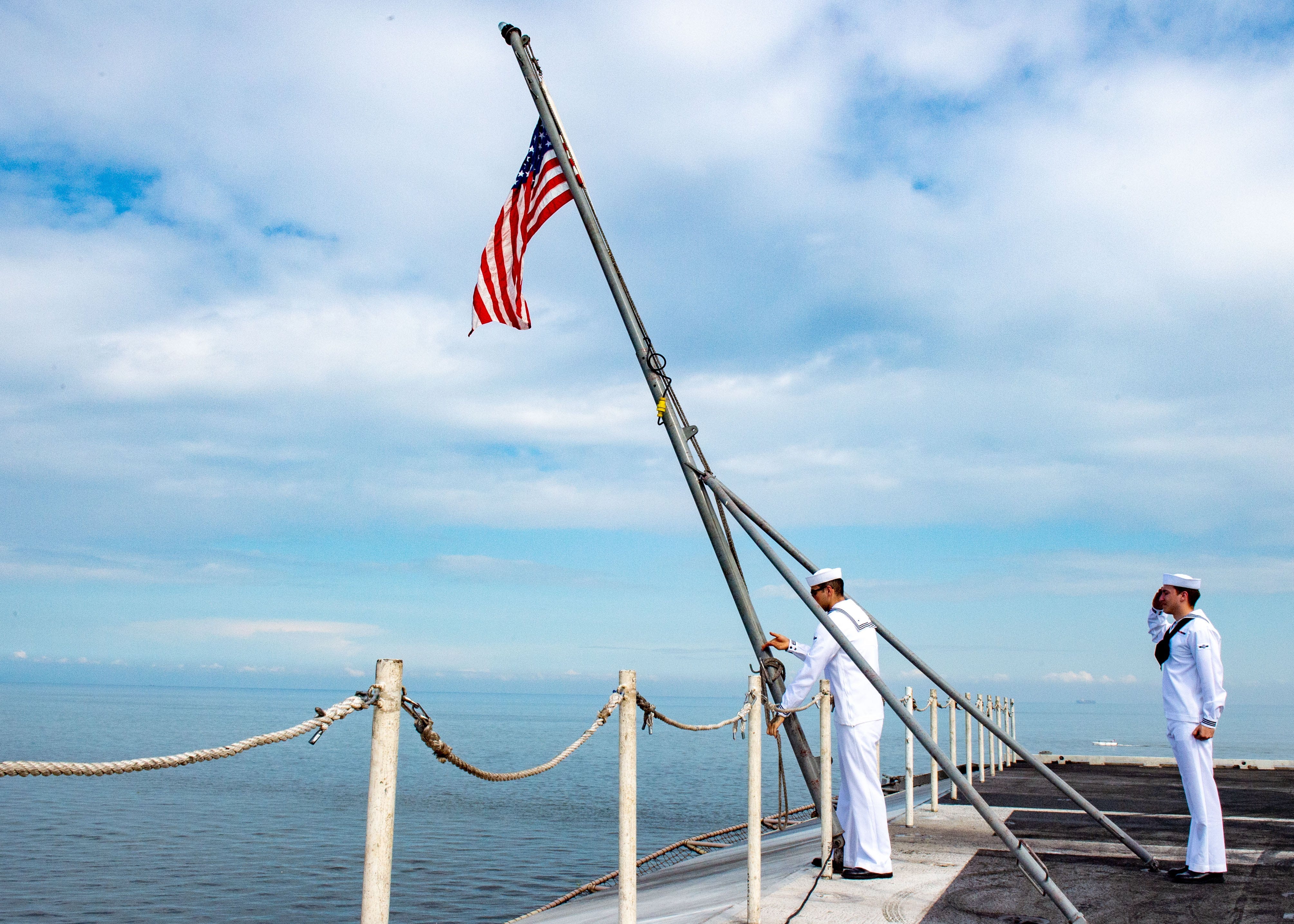
It is the quietest decapitation of Navy leadership.
Nearly two dozen admirals and a brigade combat team could disappear overnight.
Where is the alarm?
It all started with the firing of Admiral Linda Fagan. From what I understand, the Commandant of the Coast Guard, the first woman to command a military branch, was thrown out of her house. Then the first Black Chairman and the first woman CNO were fired, the flag officer firings ran heavily toward women and minorities, and a sitting senator, Mark Kelly, was threatened with recall to active duty and court-martial for saying troops should refuse illegal orders.
Nobody paid attention.
Now the Secretary of Defense has tampered with the Navy’s flag officer promotion process and struck nearly two dozen women and minority names from the list, cutting off the advancement of the Navy’s next generation of leadership in the middle of a substantially maritime fight during a war with Iran. His women in combat arms study threatens roughly 4,600 women in their jobs. That is a brigade combat team. Would we really say oopsie daisy, I don’t feel like keeping a brigade I spent billions of dollars recruiting, screening, training, and developing, because a review that has not found a single thing might tell me to? Where would they go?
There is little public outrage from the senior retired leaders who can speak on this without risking their commissions, unlike the active duty troops who cannot. And almost no dialogue about what it does to readiness. Seen for what it is, this is a four-alarm fire.
Throughout my career on active duty, particularly in special operations during the last ground combat review, and later as a congressional staffer and a senior civilian in the Pentagon, I kept having to disentangle colleagues’ emotional read of what they called “just a women’s issue” from the operational reality in front of us: leadership, readiness, mission effectiveness. The same problems we were trained to solve our entire careers.
Yes, it is concerning that women and minorities who earned their place at the top are losing it, leaders who often had to work harder and without the same connections as their peers. I am more concerned that we threw away the best of the best of the best when we needed them most, while the Navy gets called on for more and more. Who will lead America’s sailors in harm’s way so that they all come home?
Where are the voices I would expect on this? Are they afraid to lose their board seats with defense firms? Afraid to be recalled and court-martialed? Do they fear ostracism, and from whom?
I sat at the table with some of these leaders when I was the acting Director of Force Resiliency, working wicked problems like sexual assault in the military. We asked midshipmen to speak up when they saw another midshipman doing something wrong, because the first line of defense against the behavior that leads to violent interpersonal crime is a simple “hey, knock it off, we don’t do that here.” The literature backs it up: people who speak up are looked on more favorably by their peers, and it raises their social standing rather than costing it (Weiss and Morrison, 2019). We expect it of teenagers, of young adults retired flags and generals would patronizingly refer to as “these kids.” Their silence is the diffusion of responsibility every bystander study describes, the assumption that someone more senior will go first.
“The standard you walk past is the standard you accept,” Lt. Gen. David Morrison told the Australian Army in 2013. Is this the standard we accept?
The officers being purged are not who we need to hear from right now. Some are running for office. Some are figuring out their next move. It is not on them to speak out. This is not their fight. They had to fight to enter the academy, to get into aircraft, onto ships, to do every last thing in their careers. I have looked up to them my entire career, and I look up to them now.
I am tired of quiet retirement announcements.
I have heard speeches about moral courage my entire career.
I am not sure I ever want to hear another one.
It is SO enraging. I’ve had multiple people (including those who are comfortably retired!) tell me they’re so grateful that I am speaking out. Cool story but WHY DON’T THEY?
I was part of the conversation on military ethics through writing, teaching, conferences, etc. Lots of talk about values and character. Sort of wonder now how much of it was waste of breath.